
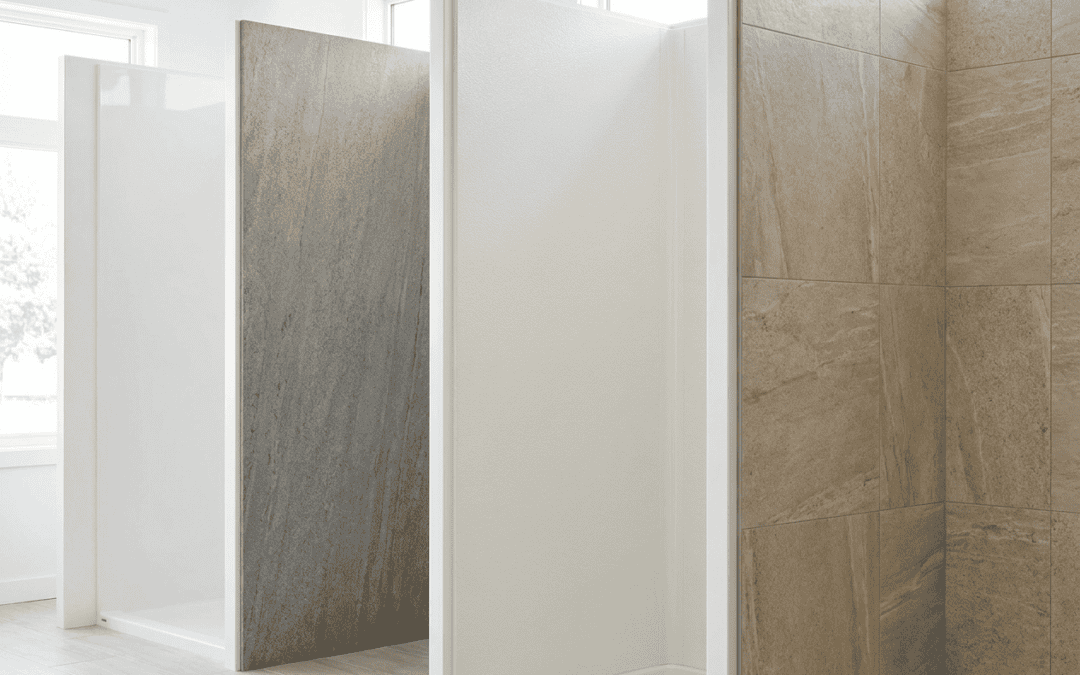
Shower wall panels are one of the biggest decisions in a shower replacement because they control much of what you see, clean, and live with every day. The right wall solution needs to handle constant moisture, work with the shower base and enclosure, and stay manageable to maintain.
For many homeowners, panels are a practical alternative to a fully tiled shower wall. Large-format panels reduce grout lines, speed installation, and can create anything from a solid surround to a convincing stone or tile look.
Material, finish, seams, and the condition of the existing bathroom walls all affect performance. Choosing the panel first and worrying about those details later is backwards.
What Are Shower Wall Panels?
Shower wall panels are large waterproof or water-resistant sheets designed to cover the walls inside a shower or tub-shower area. Depending on the product, panels may be acrylic, PVC, solid surface, laminate over a waterproof core, cultured marble, or another composite material designed for wet spaces.
Unlike traditional tile, wall panels cover more surface area with fewer joints. That makes them easier to clean and faster to install, but the wall behind them still has to be sound.
Why Homeowners Choose Wall Panels Instead of Tile
The biggest practical advantage is maintenance. A tiled shower can perform very well, but every grout joint creates another place that needs cleaning and can discolor over time.
Shower wall panels reduce the number of grout lines dramatically or eliminate them altogether. For homeowners who care more about a clean, low-maintenance shower than individual pieces of tile, that is usually a worthwhile trade.
Panels can also shorten installation time because they cover a large section of wall at once. A professional still has to measure, fit, seal, and finish the system correctly, but there is far less repetitive setting and grouting than with small-format tile.
Types of Shower Wall Panels
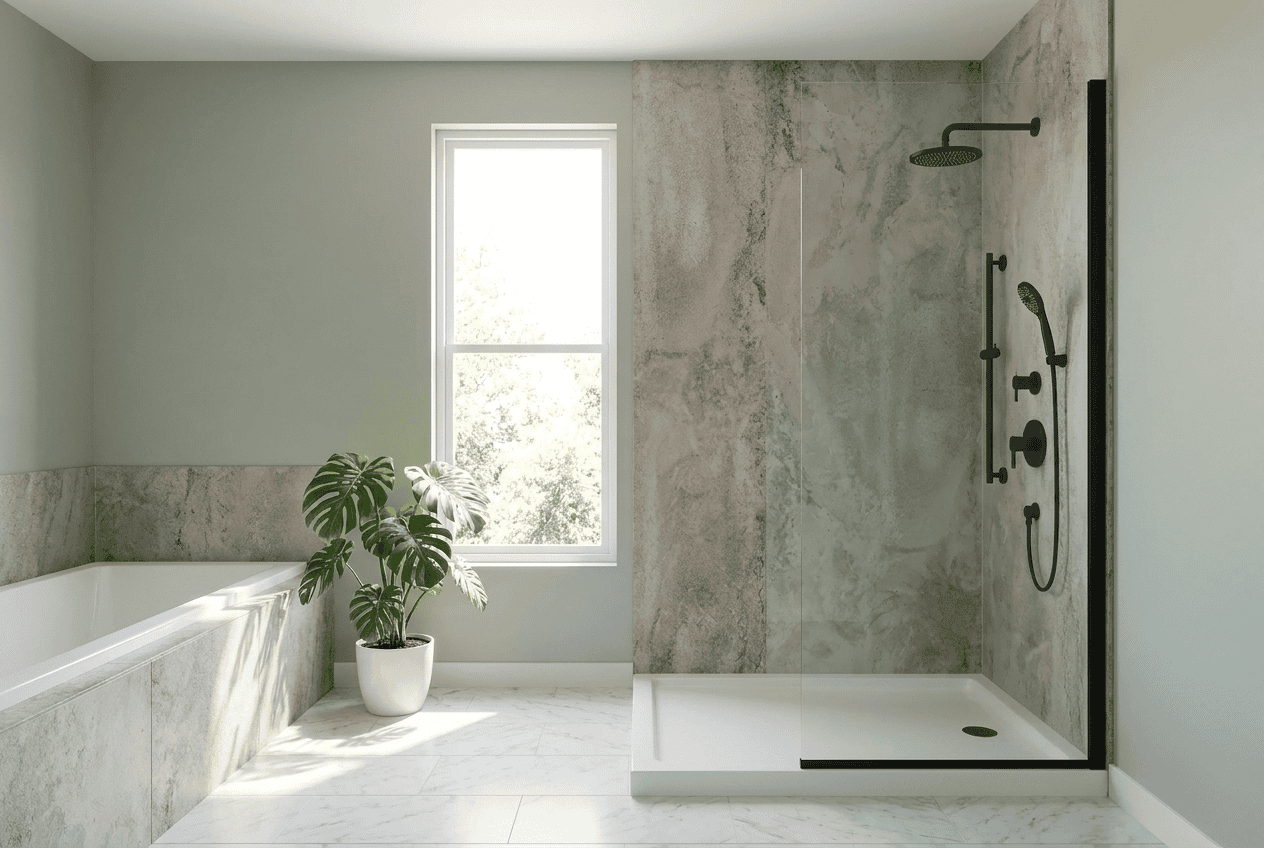
There is no single best material for every bathroom. The right choice depends on appearance, maintenance, existing wall conditions, and the overall shower budget.
Acrylic Wall Panels
Acrylic wall panels are lightweight, smooth, and common in replacement showers because they are easy to maintain. Quality acrylic wall panels resist moisture, staining, and yellowing, while the smooth surface makes soap residue easier to wipe away than textured grout.
Acrylic works well when the goal is a clean, modern shower without visual clutter. Thinner panels can feel less substantial, so material quality and installation matter more than the label alone.
PVC Bathroom Wall Panels and Composite Systems
PVC bathroom wall panels are lightweight and generally chosen for moisture resistance and affordability. Some systems use PVC or composite cores with a decorative surface, giving homeowners more finishes than a basic white surround.
These panels can create a stone, marble, or tile look without the weight of real stone or grout maintenance. They work well when budget and easy cleaning matter, but seams and trim still need careful finishing.
Solid Surface, Cultured Marble, and Stone-Look Panels
Solid surface and cultured marble panels are heavier and often feel more substantial than lightweight acrylic or PVC. Cultured marble blends stone materials with resin, while other composites create a durable, consistent shower wall.
Large panels can create a nearly seamless appearance and mimic marble or granite without individual stone tile. They work especially well when the bathroom design calls for a more substantial finish with fewer visual breaks.
Wet Wall Panels and Waterproof Performance
A shower wall system should be designed for wet conditions, but “waterproof” is not a free pass for poor installation. Wet wall panels and fully waterproof systems still depend on correctly handled seams, corners, penetrations, and transitions at the shower base.
The wall system also has to work with the rest of the shower. Our guide to the shower pan explains how the base, drain, walls, and waterproofing work together at the bottom of the enclosure.
Can Shower Wall Panels Go Over Existing Tile?
Some panel systems can go over existing tile when the surface is stable, reasonably flat, and compatible with the required adhesives. That can reduce demolition, but covering ugly tiles is not the right answer if tile is loose, the wall is damaged, or there are signs of moisture behind it.
In those cases, the problem should be corrected first. A contractor may need to remove material, repair drywall or backer board, or straighten the wall before applying bathroom wall panels so the finished surface stays secure.
Are Bathroom Wall Panels Cheaper Than Tile?
Bathroom wall panels can be cheaper than a fully tiled shower, but the comparison depends on material and preparation. Basic acrylic or PVC systems may cost less once labor is included, while premium solid-surface or stone-look panels can move into a higher price range.
The more consistent advantage is predictability. Wall panel systems use fewer materials and less grout work, which can make total cost easier to estimate than detailed tile with niches, borders, and specialty trim.
Design Options: From Classic Subway Tile to Stone Looks
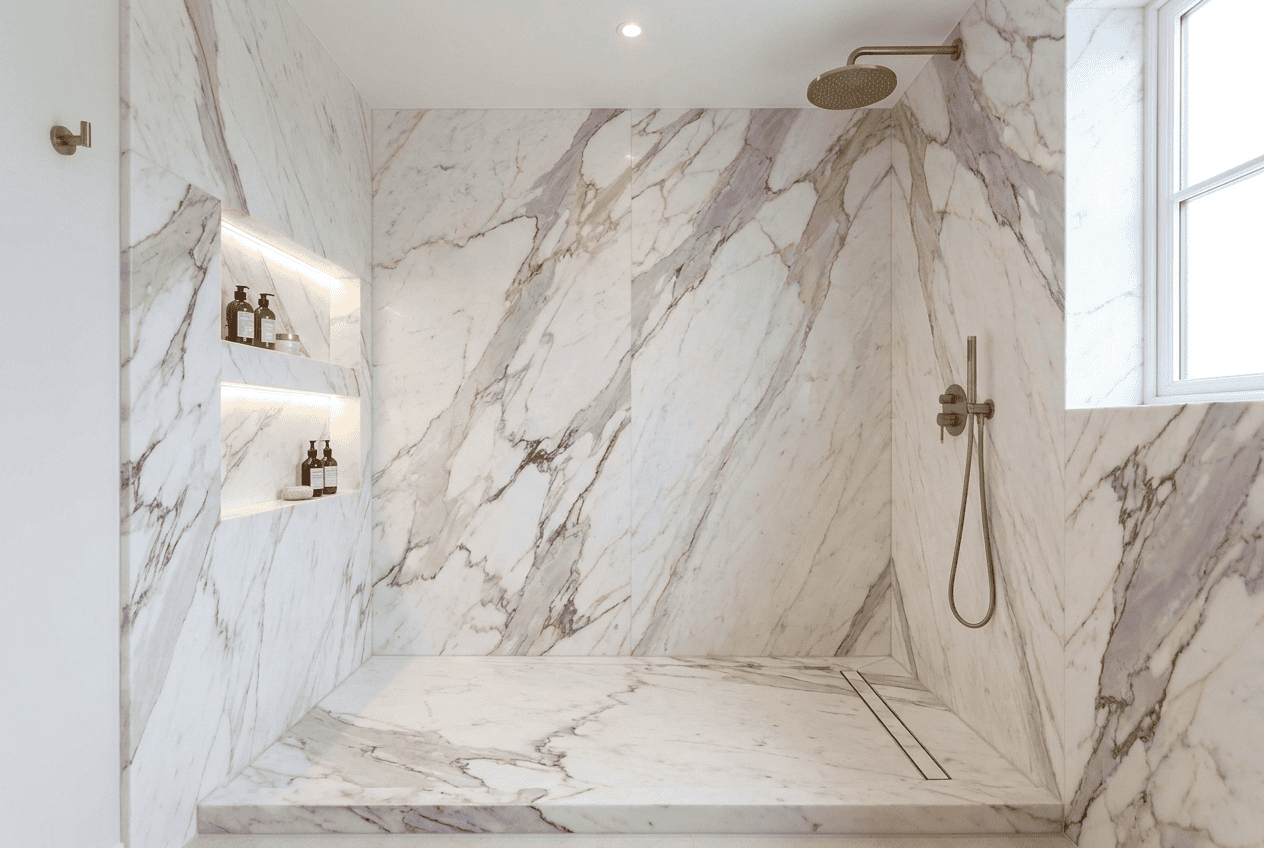
Choosing panels does not mean giving up design. Modern bathroom wall panels come in smooth solids, stone patterns, marble looks, classic subway tile patterns, and vertical tile effects that mimic installed tile.
The best finish complements the bathroom instead of competing with it. A busy shower wall can overwhelm a small space, while a quieter finish can make fixtures, flooring, and the shower door feel more intentional.
If you are changing more than the wall finish, review these shower renovation ideas before locking in a panel style. Storage, seating, fixtures, enclosure style, and wall finish should be planned together so one upgrade does not limit another.
Grout-Free Does Not Mean Maintenance-Free
A grout-free or nearly seamless shower is easier to maintain, but it still needs regular cleaning. Soap film, hard-water deposits, shampoo residue, and body oils can build up on any shower wall, even a smooth waterproof panel.
The advantage is that large panels remove many grout lines that trap residue. Smooth, scratch-resistant surfaces are especially useful for homeowners who want straightforward maintenance.
What Makes a Good Shower Wall Installation?
Good installation starts with the wall itself. Panels need a stable surface, accurate measurements, compatible adhesives, and carefully sealed joints so the finished shower looks intentional instead of patched together.
That is why “easy to install” needs context. Panels may install faster than traditional tile, but corners, plumbing penetrations, shelves, and transitions still demand precision, and a mistake across one large panel is harder to hide than a small tile adjustment.
How to Choose the Best Wall Solution for Your Bathroom
Start with maintenance, then narrow the look. If you dislike cleaning grout, there is little reason to choose a traditional tile layout simply because it is familiar.
Next, look at the room itself. A small bathroom often benefits from lighter finishes and a simpler pattern, while a larger shower can carry darker stone looks or stronger vertical designs without making the space feel busy.
Durability comes next. Ask how the material handles scratches, stains, cleaners, and moisture, and inspect corners and seams because those details often separate a premium installation from a basic surround.
How Shower Wall Panels Fit Into a Complete Shower Replacement
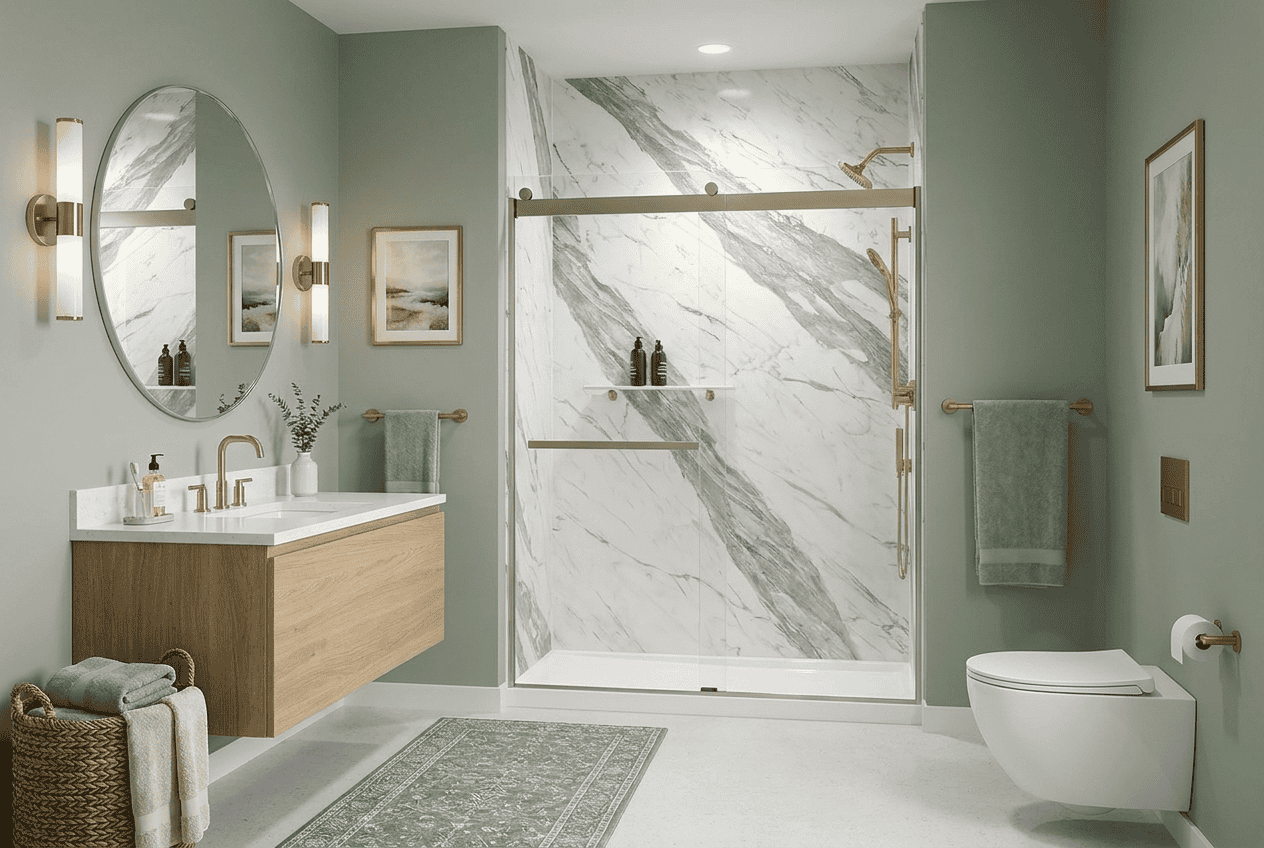
The wall system should never be selected in isolation. A complete shower replacement has to coordinate bathroom wall panels with the base or pan, valve, fixtures, shelving, shower door, threshold, and any accessibility features.
Our shower replacement guide explains the broader planning process and the choices that should be made before installation begins. Planning those pieces together works better than choosing wall panels first and forcing every other component to fit around them.
Are Shower Wall Panels Right for Your Bathroom?
For homeowners who want fewer grout lines, easier maintenance, faster installation, and a wide range of finishes, shower wall panels are a strong option. Acrylic, PVC, composite, solid-surface, and cultured-marble systems each offer a different balance of cost, durability, weight, appearance, and installation requirements.
The best wall solution is the one that fits the shower, complements the bathroom, and can be installed correctly over a sound surface. Choose the material for how you want to use and maintain the shower, not just for how the sample looks on the day you pick it.